Cheap and cheerful controller
18 posts
• Page 1 of 2 • 1, 2
Cheap and cheerful controller
 by Mr Four Square » Tue Mar 04, 2014 9:42 am
All electrical wiring discussions begin with the advisory if you don't know what you are doing ask someone who does.
This set up assumes that you have a constant mains supply (so the results are repeatable) and one heater element ( otherwise more calculations required)
I have been using one of these ebay cheapies for over a year now. I use it to control an 1800 watt element on my T500 boiler. I have tried dual digital meters ( blew it up) and analogue meters ( have to convert the results) then I saw someone had calculated the wattage output of their controller at various settings and then created their own calibrations to match.
No more converting the volt amp readings to watts or trying to guess what the relative effect of Amps or Volts are on the heating process. I have been using this one for over a year. It runs cool for hours and despite my best attempts to blow it up it keeps going. If it was rubbish it would have given up the ghost a long time ago.
Kit:
one of these
http://www.ebay.co.uk/itm/AC-220v-3000W ... 3688wt_952
This one suits the T500 boiler (1800 watts) Bigger elements require bigger controllers.
A male plug
A female plug
(cut them off a lead or an appliance and save yourself the trouble of wiring it up and finding flex)
A tough plastic, clip lid lunch box
Tools:
Drill
Pliers
Screwdriver
multi meter
A circle of paper to be your dial (or mark it directly on to the lid)
An online calculator for watts ohms and volts
Drill holes in the lunch box. This stuff fractures so take it easy.
Mount the controller through the centre of the lid
Drill a hole either side for the male and female leads to go through
Pass the leads through the holes, strip the ends ready for wiring and then tie a single granny knot in the flex to prevent the lead passing back through the hole.
Wire up the controller as per the instructions (2 terminals closest to the top are the output)
Now calculate the "wattage" output of the controller at various settings
With the boiler unplugged, measure the resistance (Ohms) across the boiler element. It was easiest to do this across the top two terminals of the boiler plug. (Make sure the element is turned on if it has a switch). The resistance of the element in ohms is a constant value. Mine is about 32 ohms.
Next mark off the various wattages. Make sure your pot(entiometer) is firmly attached to the box or your markings will become rubbish. On your controller box around the pot knob, glue a piece of paper to mark off the various wattage settings or mark them onto the lid directly. Turn the controller to zero and mark that point. Turn it to full and mark that point.
Keep your meter probes clear of metal parts and your fingers clear of live terminals. With the controller powered up and the dial on full, use your multi meter to measure the voltage output of the controller (mine was 239 volts). Enter your voltage reading and the resistance of your element (a constant result) into the online calculator. Hit enter and you will now also have a wattage value for full power. Mark this on the dial at the full power mark (mine shows 1730 watts)
It is important to understand how the movement of the dial relates to power output. At the top end of the dial a small movement produces a big reduction in power while at the bottom end a lot of movement produces very little change. Reducing full power by 100 watts requires a tiny movement. Going from 100 watts down to zero takes nearly a quarter of a turn. What this means is you will have a lot of settings at one end of the dial and bugger all in the last half.
The scale I created reduces by about 200 watts a step. 300 watt steps would be fine. Subtract 300 watts from your full maximum watt value. Enter that figure along with your constant ohm figure into the online calculator. You will now have a new voltage figure. Use your multi meter and adjust your controller to produce that voltage value. Record that point and the wattage on your dial.
Subtract 300 watts from your last recorded wattage, enter that value along with the constant resistance figure into the calculator, get your new voltage required, use your multi meter, adjust the knob down till you get that voltage, mark the dial, move on to the next setting.
The main purpose of the dial for me is to give a better understanding of how much moving the controller knob reduces the power. Thinking that a quarter turn means quarter power will end in tears.
Cheers

This set up assumes that you have a constant mains supply (so the results are repeatable) and one heater element ( otherwise more calculations required)
I have been using one of these ebay cheapies for over a year now. I use it to control an 1800 watt element on my T500 boiler. I have tried dual digital meters ( blew it up) and analogue meters ( have to convert the results) then I saw someone had calculated the wattage output of their controller at various settings and then created their own calibrations to match.
No more converting the volt amp readings to watts or trying to guess what the relative effect of Amps or Volts are on the heating process. I have been using this one for over a year. It runs cool for hours and despite my best attempts to blow it up it keeps going. If it was rubbish it would have given up the ghost a long time ago.
Kit:
one of these
http://www.ebay.co.uk/itm/AC-220v-3000W ... 3688wt_952
This one suits the T500 boiler (1800 watts) Bigger elements require bigger controllers.
A male plug
A female plug
(cut them off a lead or an appliance and save yourself the trouble of wiring it up and finding flex)
A tough plastic, clip lid lunch box
Tools:
Drill
Pliers
Screwdriver
multi meter
A circle of paper to be your dial (or mark it directly on to the lid)
An online calculator for watts ohms and volts
Drill holes in the lunch box. This stuff fractures so take it easy.
Mount the controller through the centre of the lid
Drill a hole either side for the male and female leads to go through
Pass the leads through the holes, strip the ends ready for wiring and then tie a single granny knot in the flex to prevent the lead passing back through the hole.
Wire up the controller as per the instructions (2 terminals closest to the top are the output)
Now calculate the "wattage" output of the controller at various settings
With the boiler unplugged, measure the resistance (Ohms) across the boiler element. It was easiest to do this across the top two terminals of the boiler plug. (Make sure the element is turned on if it has a switch). The resistance of the element in ohms is a constant value. Mine is about 32 ohms.
Next mark off the various wattages. Make sure your pot(entiometer) is firmly attached to the box or your markings will become rubbish. On your controller box around the pot knob, glue a piece of paper to mark off the various wattage settings or mark them onto the lid directly. Turn the controller to zero and mark that point. Turn it to full and mark that point.
Keep your meter probes clear of metal parts and your fingers clear of live terminals. With the controller powered up and the dial on full, use your multi meter to measure the voltage output of the controller (mine was 239 volts). Enter your voltage reading and the resistance of your element (a constant result) into the online calculator. Hit enter and you will now also have a wattage value for full power. Mark this on the dial at the full power mark (mine shows 1730 watts)
It is important to understand how the movement of the dial relates to power output. At the top end of the dial a small movement produces a big reduction in power while at the bottom end a lot of movement produces very little change. Reducing full power by 100 watts requires a tiny movement. Going from 100 watts down to zero takes nearly a quarter of a turn. What this means is you will have a lot of settings at one end of the dial and bugger all in the last half.
The scale I created reduces by about 200 watts a step. 300 watt steps would be fine. Subtract 300 watts from your full maximum watt value. Enter that figure along with your constant ohm figure into the online calculator. You will now have a new voltage figure. Use your multi meter and adjust your controller to produce that voltage value. Record that point and the wattage on your dial.
Subtract 300 watts from your last recorded wattage, enter that value along with the constant resistance figure into the calculator, get your new voltage required, use your multi meter, adjust the knob down till you get that voltage, mark the dial, move on to the next setting.
The main purpose of the dial for me is to give a better understanding of how much moving the controller knob reduces the power. Thinking that a quarter turn means quarter power will end in tears.
Cheers
-

Mr Four Square - Senior Distiller

- Posts: 269
- Joined: Thu Oct 03, 2013 5:57 pm
- Location: Wellington New Zealand
- Stills: Pot & T500Reflux
Re: Cheap and cheerful controller
by YHB » Tue Mar 04, 2014 11:40 am
I did this on my controller and I believe it was well worth the effort for all the reasons stated.
This link may help you with some of the calculations, It is an excel file - enter the voltage and wattage of your element and there you go.
download/file.php?id=52
Remember always fill the boiler before you switch it on - the element will not last very long - I know that is true with an exposed element ( don't ask me how I know, I just do - ok?) but I do not know for certain how the concealed elements fair under those conditions - anyone any ideas / experience ?
This link may help you with some of the calculations, It is an excel file - enter the voltage and wattage of your element and there you go.
download/file.php?id=52
Remember always fill the boiler before you switch it on - the element will not last very long - I know that is true with an exposed element ( don't ask me how I know, I just do - ok?) but I do not know for certain how the concealed elements fair under those conditions - anyone any ideas / experience ?
- YHB
- Master Distiller

- Posts: 973
- Joined: Sun Oct 23, 2011 1:55 pm
Re: Cheap and cheerful controller
by John51 » Tue Mar 04, 2014 12:56 pm
I sadly, stupidly, do have experience with dry firing a T500. Both the reset and the thermal fuse went. Not sure how both is possible but it happened.
The thermal fuse is not available to buy so that got bypassed and after some torture the reset device was working again. So far, so good.
My second biggest mistake with this hobby was forgetting to add the Vodka Star to the wash.
The thermal fuse is not available to buy so that got bypassed and after some torture the reset device was working again. So far, so good.
My second biggest mistake with this hobby was forgetting to add the Vodka Star to the wash.
-

John51 - Senior Distiller
- Posts: 434
- Joined: Sun Aug 12, 2012 1:15 pm
Re: Cheap and cheerful controller
by Myles » Tue Mar 04, 2014 6:14 pm
This does not always work folks. On some of the controllers BOTH the voltage and the current change at the same time.
To get an accurate calibration you need to measure both the current in the controller output to the element, and the voltage between the element terminals for each setpoint.
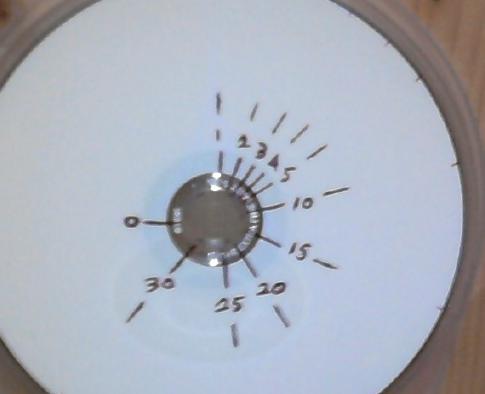
example - zero to 30 where 30 = 3kW
To get an accurate calibration you need to measure both the current in the controller output to the element, and the voltage between the element terminals for each setpoint.
example - zero to 30 where 30 = 3kW
-

Myles - Master Distiller
- Posts: 692
- Joined: Tue May 07, 2013 12:43 pm
Re: Cheap and cheerful controller
by YHB » Tue Mar 04, 2014 8:56 pm
Myles wrote:This does not always work folks. On some of the controllers BOTH the voltage and the current change at the same time.
Myles,
Sorry I do not follow that.
I though that on ALL controllers BOTH change at the same time. Ohms law, if R is constant and E changes them I must change as well.
If R is known, measure V, calculate I and W.
Or am I missing something? Usually do.
Brian
- YHB
- Master Distiller
- Posts: 973
- Joined: Sun Oct 23, 2011 1:55 pm
Re: Cheap and cheerful controller
by Easydrinker » Wed Mar 05, 2014 12:00 am
Maybe I am missing something here?
I simply plug my controller into a plug-in digital power meter,and read the power from that.Adjusting the pot. on the controller as required.Anywhere from 3000W to zero
Seems simple enough to me?
Total cost about £25.
Robert
I simply plug my controller into a plug-in digital power meter,and read the power from that.Adjusting the pot. on the controller as required.Anywhere from 3000W to zero
Seems simple enough to me?
Total cost about £25.
Robert
There is no ONE way.
-

Easydrinker - Donated to StillSmart

- Posts: 5209
- Joined: Fri Jun 21, 2013 7:09 pm
- Location: The hills of lowland Scotland
- Stills: Smart & Silly
Re: Cheap and cheerful controller
by YHB » Wed Mar 05, 2014 2:19 am
Easydrinker wrote:Maybe I am missing something here?
I simply plug my controller into a plug-in digital power meter,and read the power from that.Adjusting the pot. on the controller as required.Anywhere from 3000W to zero
Seems simple enough to me?
Total cost about £25.
Robert
That does not sound much fun.

This piece of paper saved me 25 pounds.
- YHB
- Master Distiller
- Posts: 973
- Joined: Sun Oct 23, 2011 1:55 pm
Re: Cheap and cheerful controller
by Mr Four Square » Wed Mar 05, 2014 6:29 am
Oh I don't know YHB there are some pretty expensive lunch boxes out there ... wait, its all coming back to me ...I think I built mine after knicking the idea off some bloke on a forum called StillSmart. 
EasyD . Good for you. Yours looks like an easy fix. I'm a retired electician with too many lunchboxes and too few sandwiches ...
EasyD . Good for you. Yours looks like an easy fix. I'm a retired electician with too many lunchboxes and too few sandwiches ...
-
Mr Four Square - Senior Distiller
- Posts: 269
- Joined: Thu Oct 03, 2013 5:57 pm
- Location: Wellington New Zealand
- Stills: Pot & T500Reflux
Re: Cheap and cheerful controller
by Capt-Cudellez » Wed Mar 05, 2014 6:52 pm
YHB wrote:I though that on ALL controllers BOTH change at the same time. Ohms law, if R is constant and E changes them I must change as well.
-------------------
"All" is a bit of an assumption
My controller doesn't change either - it just switches it on and off each second. So if you get 3Kw - 240v - 12.5amps then you get zero.If its on for 0.33s and off for 0.66s then the net effect is 1000w.
-

Capt-Cudellez - Donated to StillSmart
- Posts: 1139
- Joined: Tue Dec 07, 2010 12:22 am
- Location: Scotland
- Stills: SS VM, Stripper, Pot
Re: Cheap and cheerful controller
by Mr Four Square » Wed Mar 05, 2014 10:55 pm
Hi CC I can see how your device would work. There are many ways to skin a cat (sorry puss). There are more refined controllers than mine, ED's set up is simple, a whacking great Variac would work too. It depends on your budget and your knowledge. This one suited mine. A simple challenge and all up and running for less than ten pounds.
I don't believe that I have nailed the exact wattage but as a general indication of how much power is coming through it works.
And when I ask how to improve my cuts you can say... it's your dial stupid !
I don't believe that I have nailed the exact wattage but as a general indication of how much power is coming through it works.
And when I ask how to improve my cuts you can say... it's your dial stupid !
-
Mr Four Square - Senior Distiller
- Posts: 269
- Joined: Thu Oct 03, 2013 5:57 pm
- Location: Wellington New Zealand
- Stills: Pot & T500Reflux
Re: Cheap and cheerful controller
by Easydrinker » Thu Mar 06, 2014 12:37 am
YHB wrote:That does not sound much fun.
This piece of paper saved me 25 pounds.
Brian,unless you found a magic box to stick your piece of paper on,I think you are missing my point.
Controller and power meter were less than £25,combined.
Power meter already in existence to check domestic consumption;Controller built for the still.
Fun? If I want 937W,it's there,1197W twiddle the knob,any number I can think of,it delivers,- subject to the freezer,fridge, micro-wave kicking in,- I live at the end of a long overhead mains supply,the power here can be a little "tired" when it arrives.
Robert.
There is no ONE way.
-
Easydrinker - Donated to StillSmart
- Posts: 5209
- Joined: Fri Jun 21, 2013 7:09 pm
- Location: The hills of lowland Scotland
- Stills: Smart & Silly
Re: Cheap and cheerful controller
by YHB » Thu Mar 06, 2014 2:39 am
Profuse apologies, yes I did get hold of the wrong end of the stick.
I thought you were referring to one of these.
http://www.ebay.co.uk/itm/MULTIFUNCTION ... 4897.l4276
Theses seem good and appear too do away with any requirement for meters on a controller but cannot control the powder.
Once again sorry for my misunderstandfing just my over enthusiastic thritfyness taking over again.
I thought you were referring to one of these.
http://www.ebay.co.uk/itm/MULTIFUNCTION ... 4897.l4276
Theses seem good and appear too do away with any requirement for meters on a controller but cannot control the powder.
Once again sorry for my misunderstandfing just my over enthusiastic thritfyness taking over again.
- YHB
- Master Distiller
- Posts: 973
- Joined: Sun Oct 23, 2011 1:55 pm
Re: Cheap and cheerful controller
by Mr Four Square » Thu Mar 06, 2014 8:01 am
ED wrote "I simply plug my controller into a plug-in digital power meter,and read the power from that.Adjusting the pot. on the controller as required.Anywhere from 3000W to zero"
Sound a piece of the proverbial. Can you tell us more about your set up. Is it one of those units Brian showed a link to? Is the controller the same eBay cheapie I'm using?
Sound a piece of the proverbial. Can you tell us more about your set up. Is it one of those units Brian showed a link to? Is the controller the same eBay cheapie I'm using?
Last edited by Mr Four Square on Fri Mar 07, 2014 4:48 am, edited 1 time in total.
-
Mr Four Square - Senior Distiller
- Posts: 269
- Joined: Thu Oct 03, 2013 5:57 pm
- Location: Wellington New Zealand
- Stills: Pot & T500Reflux
Re: Cheap and cheerful controller
by Easydrinker » Fri Mar 07, 2014 12:14 am
My controller I built using one of these;
http://www.ebay.co.uk/itm/1pc-KYOTTO-AC ... 20b9aba410
Which I believe Brian alerted us to,way back when,and one of these;
http://www.ebay.co.uk/itm/Aluminum-Allo ... 48540f1837
Container of your choice,do earth if using metalic,and do provide air vents,personally I do not need to use a fan in there for cooling.
That is plugged into an item similar to Brian's link above,and does what I want it to.
Yes Brian,I am also not for spending money that I do not need to,and like your thrifty tips.
Miss-understanding;it may yet lead to WW3..........
Regards,
Robert.
Edit/Addendum
Running a strip tonight,nothing on TV,so spent some time scooting around THIS site catching up on posts,seems controllers have been topic on various threads.I missed those.
Anybody not reading Brian's posts on controllers before,hit the search box top right,input the right keywords,discover all that you may need to know.
Really do HTH.
http://www.ebay.co.uk/itm/1pc-KYOTTO-AC ... 20b9aba410
Which I believe Brian alerted us to,way back when,and one of these;
http://www.ebay.co.uk/itm/Aluminum-Allo ... 48540f1837
Container of your choice,do earth if using metalic,and do provide air vents,personally I do not need to use a fan in there for cooling.
That is plugged into an item similar to Brian's link above,and does what I want it to.
Yes Brian,I am also not for spending money that I do not need to,and like your thrifty tips.
Miss-understanding;it may yet lead to WW3..........
Regards,
Robert.
Edit/Addendum
Running a strip tonight,nothing on TV,so spent some time scooting around THIS site catching up on posts,seems controllers have been topic on various threads.I missed those.
Anybody not reading Brian's posts on controllers before,hit the search box top right,input the right keywords,discover all that you may need to know.
Really do HTH.
There is no ONE way.
-
Easydrinker - Donated to StillSmart
- Posts: 5209
- Joined: Fri Jun 21, 2013 7:09 pm
- Location: The hills of lowland Scotland
- Stills: Smart & Silly
Re: Cheap and cheerful controller
by fuf » Fri Mar 07, 2014 11:45 am
I purchased this http://www.ebay.co.uk/itm/2000W-220V-AC ... 2ecc08cabc
It was the cheapest I could find.
It was the cheapest I could find.
fuf.... :

Nil illegitimi carborundum
Nil illegitimi carborundum
-

fuf - Donated to StillSmart
- Posts: 128
- Joined: Fri Jan 24, 2014 9:56 pm
- Location: Derbyshire
- Stills: T500 + SPP
18 posts
• Page 1 of 2 • 1, 2
Who is online
Users browsing this forum: No registered users and 1 guest