Re: Yet another power comtroller
 Posted: Sun Jun 21, 2015 11:39 am
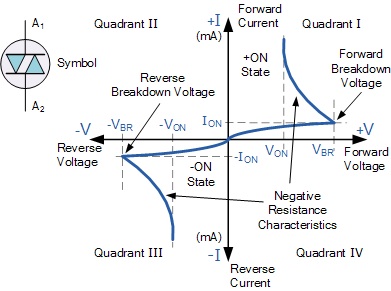
Done a little digging into how these things work and think some of my above assumptions are mistaken. As myles pointed out the triac is switched by a diac. A diac is like a two way zener diode so works for ac. A zener diode has a switching voltage that it won't conduct below. As I pointed out this is controlled by an R C circuit. Essentially the R C circuit determines how much voltage gets through to the diac. It is switched by volts rather than current but obviously the two go hand in hand. When you make the resistance (the pot) in the R C circuit zero then all of the changing volts in the sine wave are enough to trigger the diac and you get full power. As you turn the resistance up the smaller voltage values are not getting through enough to trigger the diac, the diac stays off and so does the triac. You are clipping your wave form. The more you turn the resistance up the higher the volts it needs to get through sufficiently to activate the diac. More and more is clipped from the waveform until eventually not enough can get through the R C circuit to trigger the diac and so the triac is always off.
The upshot of this is that I suspect the percentage you can turn down to will always be the same regardless of load size. It is voltage dependant and set by the design of the R C circuit and the gate voltage of the diac. Myles got lucky with his. So I'll only ever be able to turn down to about seven percent of any given load and it doesn't matter what load I use to calibrate the pot for optimum resolution.
What this means is that I will have finer control by running a smaller controlled element with a second uncontrolled element that can be turned on and off. This adds to the justification of the popular two element design.
If you read this far Happy Summer Solstice
The upshot of this is that I suspect the percentage you can turn down to will always be the same regardless of load size. It is voltage dependant and set by the design of the R C circuit and the gate voltage of the diac. Myles got lucky with his. So I'll only ever be able to turn down to about seven percent of any given load and it doesn't matter what load I use to calibrate the pot for optimum resolution.
What this means is that I will have finer control by running a smaller controlled element with a second uncontrolled element that can be turned on and off. This adds to the justification of the popular two element design.
If you read this far Happy Summer Solstice