Glycol Double Boiler
 Posted: Fri Jun 21, 2013 8:27 pm
I mentioned previously that I like this style of double boiler. The use of indirect heating is good if you have any sort of botanical or grain in the boiler. Doing that with an immersion heater is a disaster waiting to happen.
Now I use Propylene Glycol - this is food safe and is not your car antifreeze. It is a veterinary medicine and is also used to make soap, candles etc.
I admit it is not cheap but it has advantages that make it worth the expense IMO.
Pressurised Jacketed boilers (for steam) are not a home build option - unless building such things is your day job. I wouldn't consider building one myself.
However, a bain marie style pot in pot is an easy home build.
I cheated and managed to find a big aluminium double boiler.
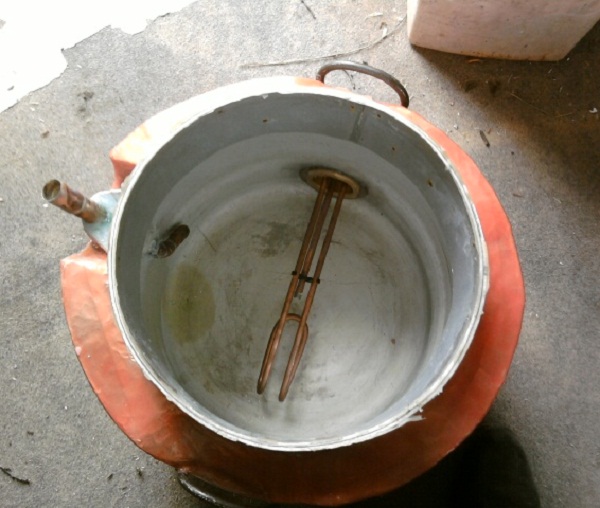
It used to belong to a scout group. I discarded the aluminium inner pot, but the use of aluminium for the outer is absolutely fine. First time round I fitted a kettle element. It lasted a few weeks.
So I ditched that and used a standard 3 kW element instead. The compression style element bosses in our 2.25" size are easy enough to find.
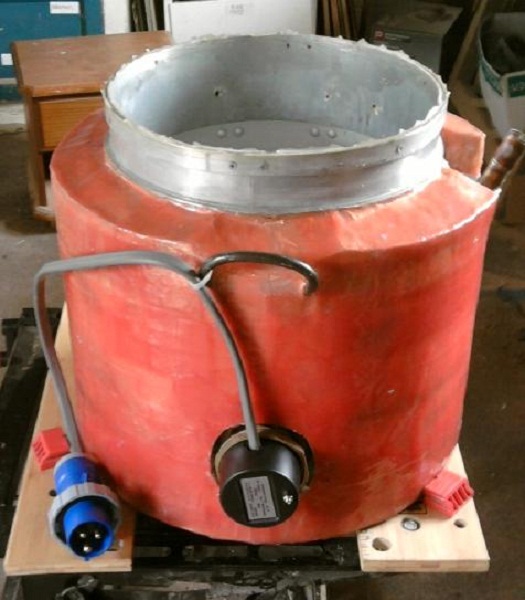
Next I completely encapsulated the pot in expanding foam. I simply made a cardboard pot 2" bigger than the boiler. I put some small wood blocks in the bottom so there is foam under the boiler as well as around the sides. Then just filled the gap with spray foam. After that for durability, I put a fibreglass skin on the outside of the insulation. Rock solid.
Now I use Propylene Glycol - this is food safe and is not your car antifreeze. It is a veterinary medicine and is also used to make soap, candles etc.
I admit it is not cheap but it has advantages that make it worth the expense IMO.
Pressurised Jacketed boilers (for steam) are not a home build option - unless building such things is your day job. I wouldn't consider building one myself.
However, a bain marie style pot in pot is an easy home build.
I cheated and managed to find a big aluminium double boiler.
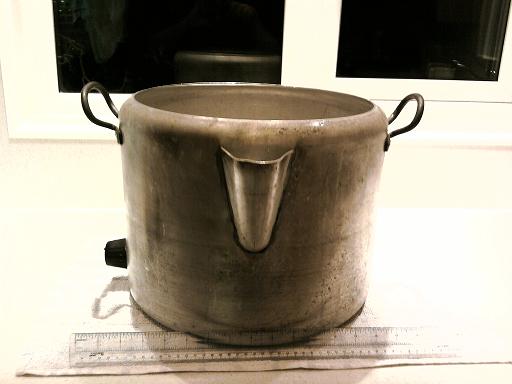
It used to belong to a scout group. I discarded the aluminium inner pot, but the use of aluminium for the outer is absolutely fine. First time round I fitted a kettle element. It lasted a few weeks.
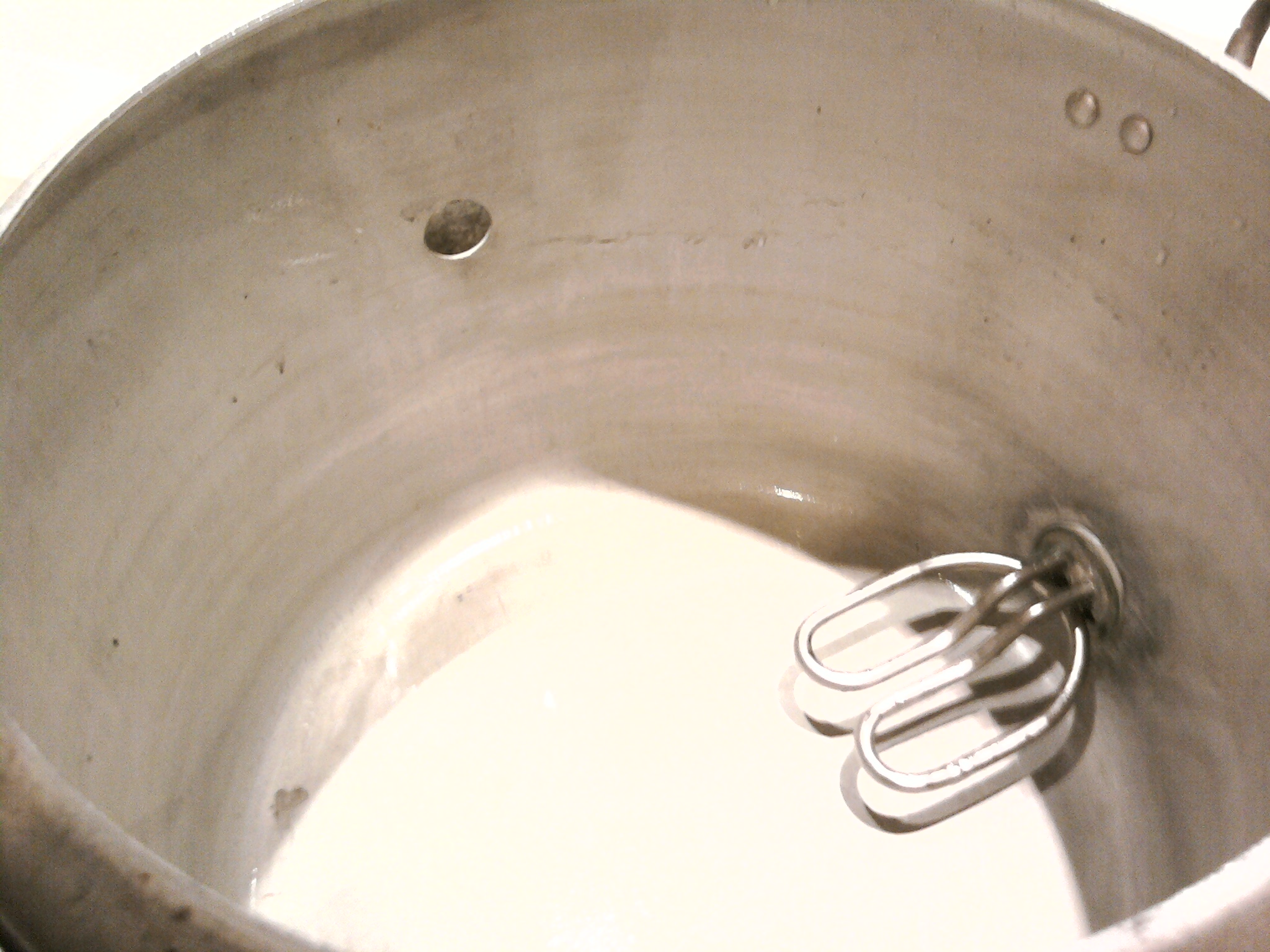
So I ditched that and used a standard 3 kW element instead. The compression style element bosses in our 2.25" size are easy enough to find.
Next I completely encapsulated the pot in expanding foam. I simply made a cardboard pot 2" bigger than the boiler. I put some small wood blocks in the bottom so there is foam under the boiler as well as around the sides. Then just filled the gap with spray foam. After that for durability, I put a fibreglass skin on the outside of the insulation. Rock solid.