Still Learning
 Posted: Thu Jun 13, 2013 6:42 am
Gentleman,
I am new to home distillation, but a reasonably experienced beer and wine brewer, and now the proud owner of a Smartstill. Firstly I would like to thank everybody that has contributed to this forum, which I have spent many hours reading and learning from. Also particularly useful has been the Airstill Brief, which will be my guide moving forward - Aidanmac and Mozr, thank you.
First of all summary of where I am.
My objective is to produce high-quality/purity gin for personal use so that Her Indoors can have a gin and tonic before dinner in the evening. For me cost of production is not a problem but obtaining the materials because of my unique location provides a challenge. As you may guess there are neither pubs nor homebrew shops in this neck of the woods.
Making washes has been relatively easy and while I used Turbo yeasts I have not been comfortable with these because of the difficulty of maintaining <25°C temperature in a 25 L batch. I have just run a Tomato Paste Wash in two 22 L PET water carboys to give a final wash volume of 34 L. This was done with locally purchased materials and dried Baker's yeast. It fermented out in 5 days, 12%, cleared well and the temperature stayed below 25° C. This will be my basic wash moving forward.
I am currently stripping this with no problems whatsoever. I use a timer that produces 1,350 ml consistently in 4 hours and 45 minutes. I can do two runs a day and within a week I will have a batch ready for the second distillation.
Now here come the questions:
1. I plan to construct and use an activated carbon filter as described by Gert Strands. I will be using carbon from a home water purification/filter canister. Do I filter after the stripping run or after the final run?
2. Large glass containers are difficult to obtain here. However, PET water bottles are readily available. Are there any quality issues or other problems with storing the final spirit in these?
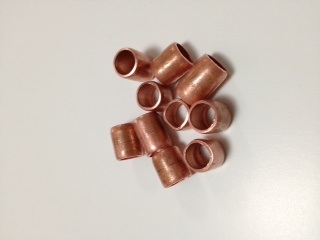
3. It appears that contact with copper metal at some point during the process is beneficial. I will certainly replace the crappy plastic nozzle with a copper spout (thanks John51), however I was wondering whether to use pieces of copper sawn from a water pipe as an anti-bumping agent. Will this be effective as an anti-bumping agent and will it be beneficial in improving quality?
4. Finally I am using sunflower oil as a conditioner. So far this has worked, I would be interested to hear your comments on this and other alternatives?
For those of you that made it this far through my post, thank you for your patience. As I become more experienced I hope to be a contributor as well as a seeker of advice.
I am new to home distillation, but a reasonably experienced beer and wine brewer, and now the proud owner of a Smartstill. Firstly I would like to thank everybody that has contributed to this forum, which I have spent many hours reading and learning from. Also particularly useful has been the Airstill Brief, which will be my guide moving forward - Aidanmac and Mozr, thank you.
First of all summary of where I am.
My objective is to produce high-quality/purity gin for personal use so that Her Indoors can have a gin and tonic before dinner in the evening. For me cost of production is not a problem but obtaining the materials because of my unique location provides a challenge. As you may guess there are neither pubs nor homebrew shops in this neck of the woods.
Making washes has been relatively easy and while I used Turbo yeasts I have not been comfortable with these because of the difficulty of maintaining <25°C temperature in a 25 L batch. I have just run a Tomato Paste Wash in two 22 L PET water carboys to give a final wash volume of 34 L. This was done with locally purchased materials and dried Baker's yeast. It fermented out in 5 days, 12%, cleared well and the temperature stayed below 25° C. This will be my basic wash moving forward.
I am currently stripping this with no problems whatsoever. I use a timer that produces 1,350 ml consistently in 4 hours and 45 minutes. I can do two runs a day and within a week I will have a batch ready for the second distillation.
Now here come the questions:
1. I plan to construct and use an activated carbon filter as described by Gert Strands. I will be using carbon from a home water purification/filter canister. Do I filter after the stripping run or after the final run?
2. Large glass containers are difficult to obtain here. However, PET water bottles are readily available. Are there any quality issues or other problems with storing the final spirit in these?
3. It appears that contact with copper metal at some point during the process is beneficial. I will certainly replace the crappy plastic nozzle with a copper spout (thanks John51), however I was wondering whether to use pieces of copper sawn from a water pipe as an anti-bumping agent. Will this be effective as an anti-bumping agent and will it be beneficial in improving quality?
4. Finally I am using sunflower oil as a conditioner. So far this has worked, I would be interested to hear your comments on this and other alternatives?
For those of you that made it this far through my post, thank you for your patience. As I become more experienced I hope to be a contributor as well as a seeker of advice.